Palazzo Madama, Turin
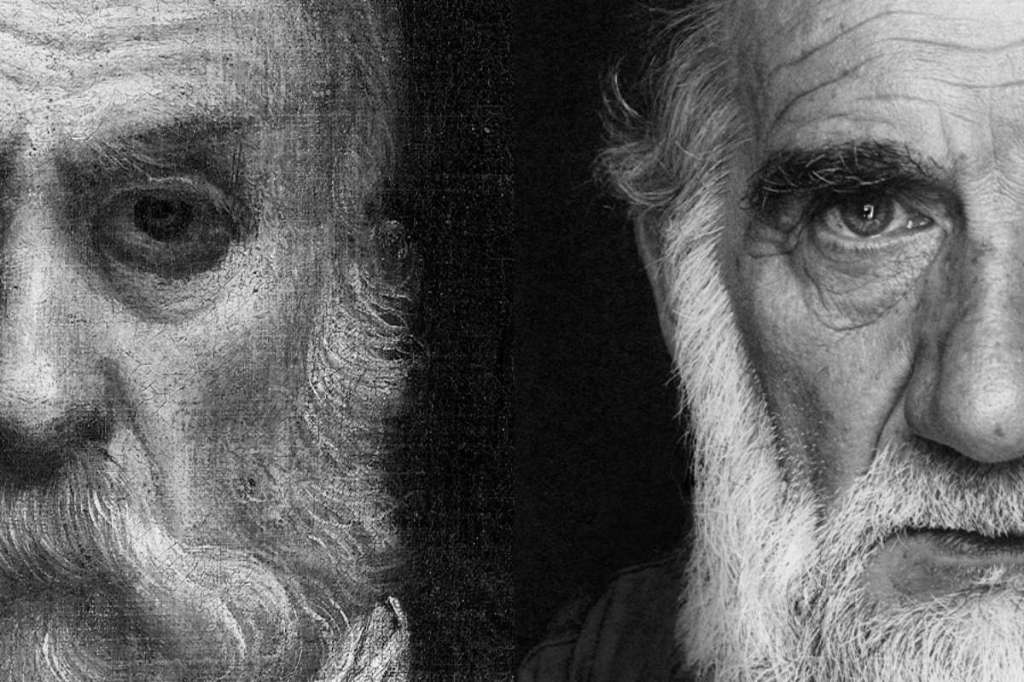
From 19 September 2025 to 12 January 2026, Palazzo Madama – Turin Civic Museum of Ancient Art and the Emilio and Annabianca Vedova Foundation in Venice present the exhibition “Vedova Tintoretto. In dialogue”, curated by Gabriella Belli and Giovanni Carlo Federico Villa.
An exceptional exhibition designed to bring together the art of two great Venetian painters, each of whom was one of the greatest interpreters of his time – Jacomo Robusti, known as Tintoretto (Venice, 1518-1594) and Emilio Vedova (Venice, 1919-2006) – read in parallel, so as to address the development of Vedova’s work in comparison with that of his chosen master, investigating similarities and consonant (or dissonant) themes underlying their individual expressive choices. Tintoretto was fundamental to Vedova’s artistic training, and the exhibition at Palazzo Madama highlights the impetus and strength of the complex relationship between the two artists by juxtaposing masterpieces by the Renaissance master and the informal artist.
The exhibition project stems from the extraordinary opportunity to host in Turin one of the final and most paradigmatic works of Tintoretto’s human and artistic career: the Self-Portrait of 1588, on loan from the Musée du Louvre. This canvas was more than just an iconographic model, representing, as can be seen from the interpretations of Edouard Manet – who replicated it and considered it the most beautiful painting in the world – and from the writings of Jean-Paul Sartre, a sort of poetic and conceptual identification for many artists.
Gabriella Belli states: ‘For the first time, this exhibition outlines with extreme scientific rigour the processes of the formation of the young Vedova’s thinking on Tintoretto’s pictorial texts. The orderly and visionary journey projects the public into the full maturity of the Venetian painter, when his debt to Tintoretto’s incandescent and premonitory painting was still strong. The intensity can also be seen in Vedova’s monumental work …in continuum, 100 or more canvases, a unique work, almost a tribute in happy competition with the creative effort of the great Venetian canvases of his prophet Tintoretto.”
Giovanni Carlo Federico Villa continues: “This formidable dialogue on the making of art was strongly desired by Palazzo Madama to evoke the role of Turin’s Civic Museums as they were ingeniously conceived and desired by Vittorio Viale, one of the most significant European directors of the 20th century. Viale brought the Civic Museum to Palazzo Madama, created the Civic Gallery of Modern Art and finally organised epoch-making exhibitions with Luigi Carluccio. This exhibition is dedicated to the mastery of Viale (1891-1977), in a precise reflection on the ancient capable of generating the contemporary.”
Tintoretto is, in fact, the interpreter of a pictorial narrative capable of reaching our time by bringing together “Michelangelo’s design and Titian’s colouring”, exalted over the centuries by the romantic genius of the Englishman Ruskin (1819-1900) – ‘I have never been so completely annihilated in the presence of a human mind as I have been today in the presence of Tintoretto’ – and by the pens of Goethe, Stendhal and Henry James.
Emilio Vedova wrote about his great master: ‘Tintoretto was someone I identified with. That space was precisely a place where events took place. That direction with its syncopated and violent rhythms, magmatic with energies of inner depths of passions of moving emotions (…)’.
For Vedova, Tintoretto represents the everyday familiarity of the churches, schools and palaces of Venice, where he sought and found his master, the only one who revealed to him the secret of transforming technique from a mere expressive tool for beautiful forms into a sharp blade capable of engraving itself in history. Vedova drew inspiration from him for themes and content, learning basic lessons on how to dominate the space of the canvas, translate the light of his compositions into colour, and model forms with quick, unhesitating gestures, which sprang from his new style, which already in 1948 abandoned all figurative temptation in favour of abstraction. Finally arriving at the unforgettable sequence of the work …in continuum, interpenetrations/translations ’87/’88, he proves once again how much the encounter of a lifetime also made his disciple great, offering him the necessary impetus to go further.
The exhibition Vedova Tintoretto. In Dialogue, held in the Senate Hall of the Kingdom of Italy, presents around fifty masterpieces, including paintings by Emilio Vedova and works by Tintoretto, such as the sensational Camerlenghi altarpieces, on extraordinary loan from the Gallerie dell’Accademia in Venice, and some of the works from the famous Metamorphoses cycle, now preserved in the Gallerie Estensi in Modena. The intense dialogue between the two artists develops from Vedova’s early drawings from 1936, through the canvases of the 1940s and 1950s dedicated to reflections on Tintoretto’s paintings, such as The Multiplication of the Loaves and Fishes (from Tintoretto) (1942), The Crucifixion (from Tintoretto) (1947), (study from Tintoretto’s Dream of St Mark) (1956), and those of the 1980s.
Completing the dialogue and the exhibition is Vedova with the monumental installation …in continuum, interpenetration/translations ’87/’88: more than one hundred large canvases, assembled together in a development that will challenge the verticality of the Senate hall, testimony to Vedova’s evolution as he continues his confrontation with his ideal master with visionary power.
The exhibition has been made possible thanks to the support of Valore Cultura, the official sponsor of the exhibition as part of Generali’s multi-year programme to promote art and culture.
Emanuela Borgatta Dunnett
 Manu Writes and Reviews